
Introduction:
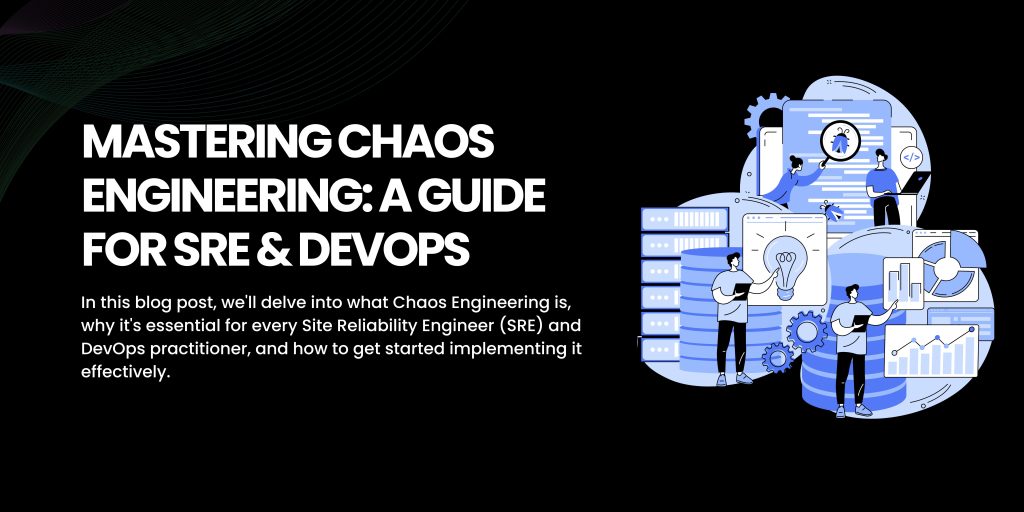
“In our chaos engineering blog series, we’ve delved into the origins, principles, user personas, benefits, best practices, and challenges of this discipline. Now, let’s explore what Chaos Engineering truly entails, its crucial role for every Site Reliability Engineer (SRE) and DevOps practitioner, and practical steps to effectively implement it.”
In the ever-evolving landscape of software development and operations, the need for reliability and resilience has become paramount. As systems grow in complexity and scale, the probability of failures increases, leading to potential downtime, user dissatisfaction, and revenue loss. This is where Chaos Engineering emerges as a crucial practice, enabling teams to proactively identify weaknesses in their systems and build more resilient architectures.
Chaos Engineering: Benefits, Best Practices, and Challenges
- May 03, 2024
- Parul Prajapati
- Blog
- No comments yet
Enhancing Resilience in Complex System
In an era where digital systems power much of our daily lives, ensuring their reliability and resilience is paramount. Chaos Engineering emerges as a methodology to proactively identify weaknesses
in complex systems before they become critical failures. It involves deliberately injecting faults and disturbances into a system to observe how it
responds, thereby uncovering vulnerabilities and enhancing overall resilience.

Chaos engineering involves intentionally causing controlled failures in production or pre-production environments to understand their impact and improve resiliency strategies. It helps businesses mitigate potential damages by identifying weaknesses and refining incident response plans. In the fast-paced world of IT infrastructure and application management, unexpected & unplanned failures can wreak havoc on businesses, leading to a cascade of detrimental effects. From revenue loss and inflated operational expenses to disgruntled customers and tarnished brand reputation, the repercussions of downtime are multifaceted and costly.
Application observability meets developer observability
- Apr 15, 2024
- Parul Prajapati
- Blog
- No comments yet

Introduction
In the ever-changing software development landscape, having a thorough understanding of your application environment is critical. At Cavisson Systems, Inc., we understand how important visibility is to an organization’s success. By combining application and developer observability, you can gain a comprehensive overview of your environment.
In today’s hyper-connected digital world, user experience (UX) has become the cornerstone of success for online businesses. Whether it’s an e-commerce platform, a financial application, or a media streaming service, the key to retaining and attracting users is providing seamless, fast, and intuitive experiences. This is where Real User Monitoring (RUM) plays a pivotal role, and at Cavisson Systems, Inc., we’re at the forefront of revolutionizing how companies monitor and optimize their digital user experiences.
Business + IT = BT! Leveraging Cavisson’s APM to Unlock the True Value of Your Organization
- Mar 19, 2024
- Parul Prajapati
- Blog
- No comments yet

In today’s dynamic and interconnected business landscape, the convergence of business and Information Technology (IT) has become more than just a trend—it’s a strategic imperative. This fusion has reshaped transactions, redefined customer interactions, and revolutionized operational efficiency. Let’s delve into the symbiotic relationship between business and IT, and explore how it manifests in modern business transactions.
Introduction
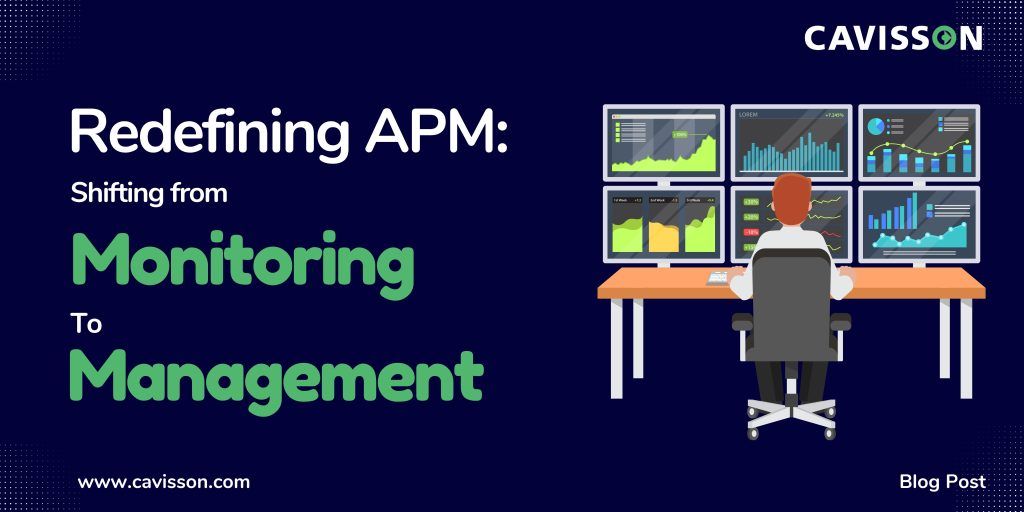
Application Performance Management (APM) has become a crucial practice in modern software development and operations. Traditionally, APM has been synonymous with monitoring—keeping a vigilant eye on system performance metrics and reacting to deviations. However, as technology landscapes evolve and demands on applications grow more complex, the role of APM is also evolving. In today’s digital age, APM is not just about monitoring; it’s about proactive management and optimization. Let’s explore how this shift from monitoring to management is redefining APM.
The future of Application Performance Monitoring (Application Performance Management or APM) will be closely connected to the growth of Artificial Intelligence in handling IT tasks (AIOps). This means that APM tools will increasingly rely on artificial intelligence to monitor and improve the performance of software applications. AIOps is a revolutionary approach to managing and optimizing the performance of applications, networks, and IT infrastructures. APM is more than just monitoring; it’s about leveraging AI and automation to make proactive decisions and streamline operations.
NetDiagnostics – Next Generation End-to-End Observability Solution
- Jan 25, 2024
- Parul Prajapati
- Blog
- No comments yet
Introduction of NetDiagnostics:
NetDiagnostics is a next generation application performance monitoring (APM) tool developed by Cavisson Systems. Built to assist organizations in identifying the “why” behind application or system level issues, NetDiagnostics provides end-to-end observability by combining application, infrastructure, log and user monitoring in a single platform.
This approach not only eliminates the need to have multiple solutions for monitoring different components of your application landscape but provides context based information by combining varied data sources to assist your teams in drastically reducing the mean time to detect (MTTD).
Combined with NetDiagnostics’ advanced automatic root cause analysis or AutoRCA capabilities, teams are equipped to drill down to accurate root cause thereby also reducing the mean time to resolution (MTTR).