
From Monitoring to Observability: What Modern Enterprises Really Need in 2026

The questions enterprises ask about their systems have fundamentally changed.

In 2020, teams asked: “Is my system up?”

In 2026, they’re asking: “Why is the user experience degrading? Where exactly is the problem? How fast can we fix it?”

This evolution from traditional monitoring to full-scale observability isn’t just a technical upgrade—it’s a survival strategy. Cloud-native architectures, microservices proliferation, AI-driven applications, and unforgiving user expectations have made the old playbook obsolete.

At Cavisson Systems, we witness this transformation daily as enterprises abandon siloed metrics for unified visibility across applications, infrastructure, logs, and real user experiences.

Why Traditional Monitoring No Longer Works?

Traditional monitoring served us well for decades. It tracked known metrics—CPU usage, memory consumption, response times, uptime—against predefined thresholds. But today’s digital environments have outgrown this approach.

The new reality:

  • Architectures are distributed, containerized, and ephemeral
  • Failures cascade in non-linear, unpredictable ways
  • Performance issues emerge from hidden dependencies
  • User experience degrades long before alerts fire

The critical difference:

  • Monitoring tells you what happened
  • Observability tells you why it happened

Observability: The New Foundation for Digital Resilience

Modern observability rests on three interconnected pillars:

  1. Metrics – Quantitative performance indicators that reveal trends and anomalies
  2. Logs – Context-rich system events that explain what’s happening beneath the surface
  3. User Experience Data – How real users and synthetic journeys actually behave in production

True observability doesn’t just collect these signals—it weaves them into a coherent narrative, enabling teams to move from detection to resolution with speed and confidence.

The Cavisson Observability Ecosystem

Cavisson Systems delivers unified observability that empowers enterprises to proactively manage performance, reliability, and digital experience across their entire stack.

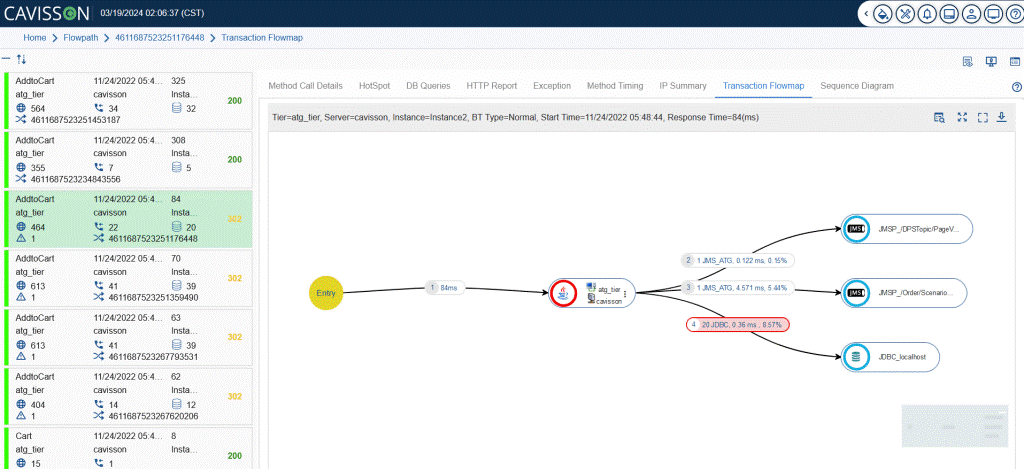
1. Application Performance Monitoring with NetDiagnostics

Your applications are the heartbeat of digital business. Any slowdown directly impacts revenue, trust, and competitive position.

NetDiagnostics provides:

  • Deep visibility across all application tiers
  • Real-time transaction tracing through complex architectures
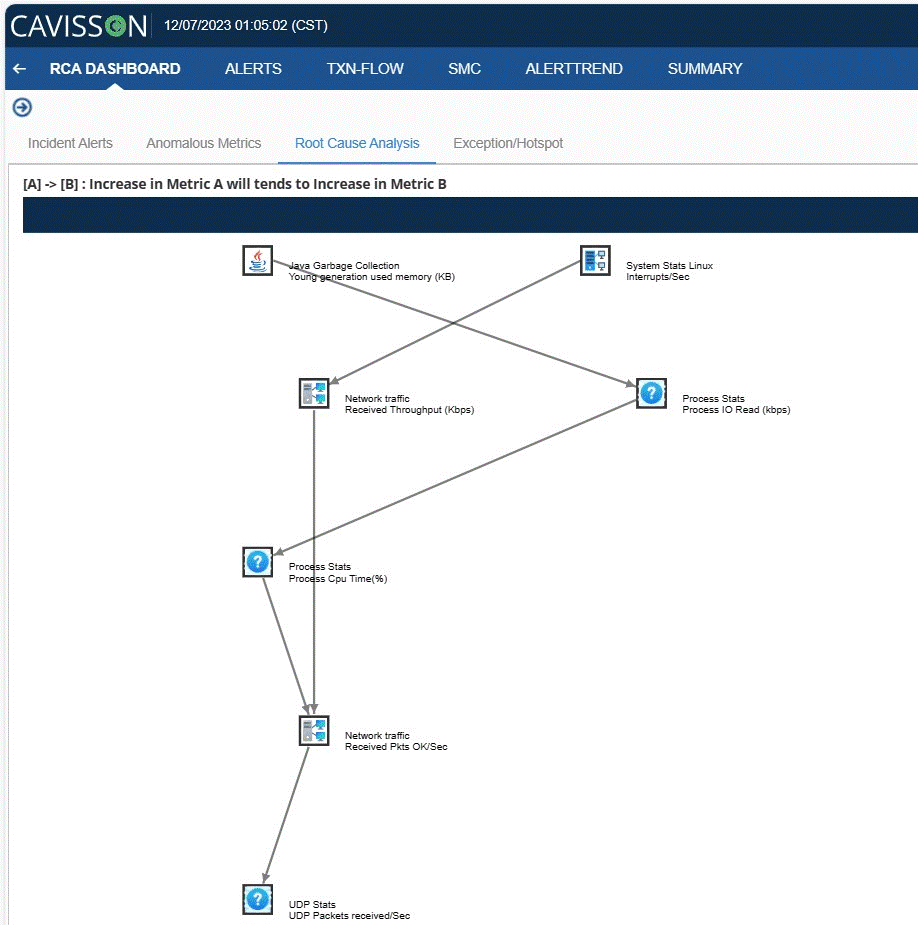
  • Intelligent anomaly detection that learns your normal
  • Rapid root-cause analysis that pinpoints issues in minutes, not hours

The result: Faster Mean Time to Resolution (MTTR) and the confidence to deploy rapidly without fear.

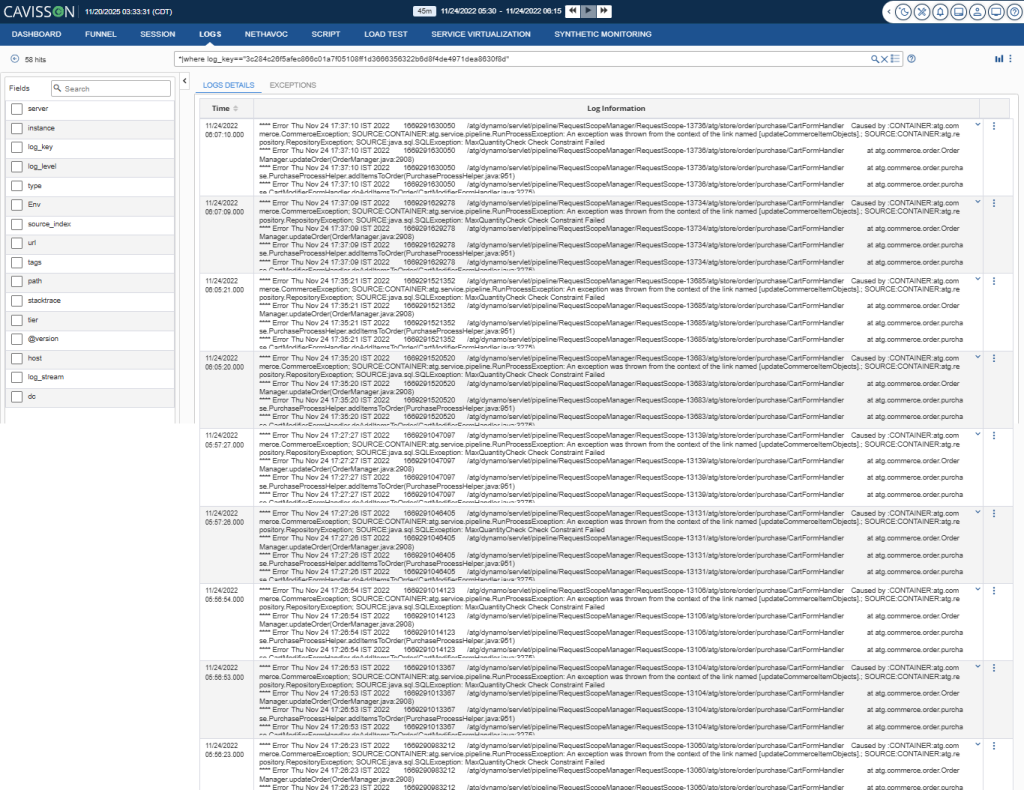
2. Log Intelligence with NetForest

Logs contain the richest operational truth in your environment—yet they’re often the most underutilized resource.

NetForest transforms log chaos into clarity by:

  • Centralizing logs across distributed systems into a single source of truth
  • Correlating log data with application performance metrics
  • Enabling lightning-fast diagnosis during critical incidents

The result: Your team shifts from reactive firefighting to proactive problem prevention.

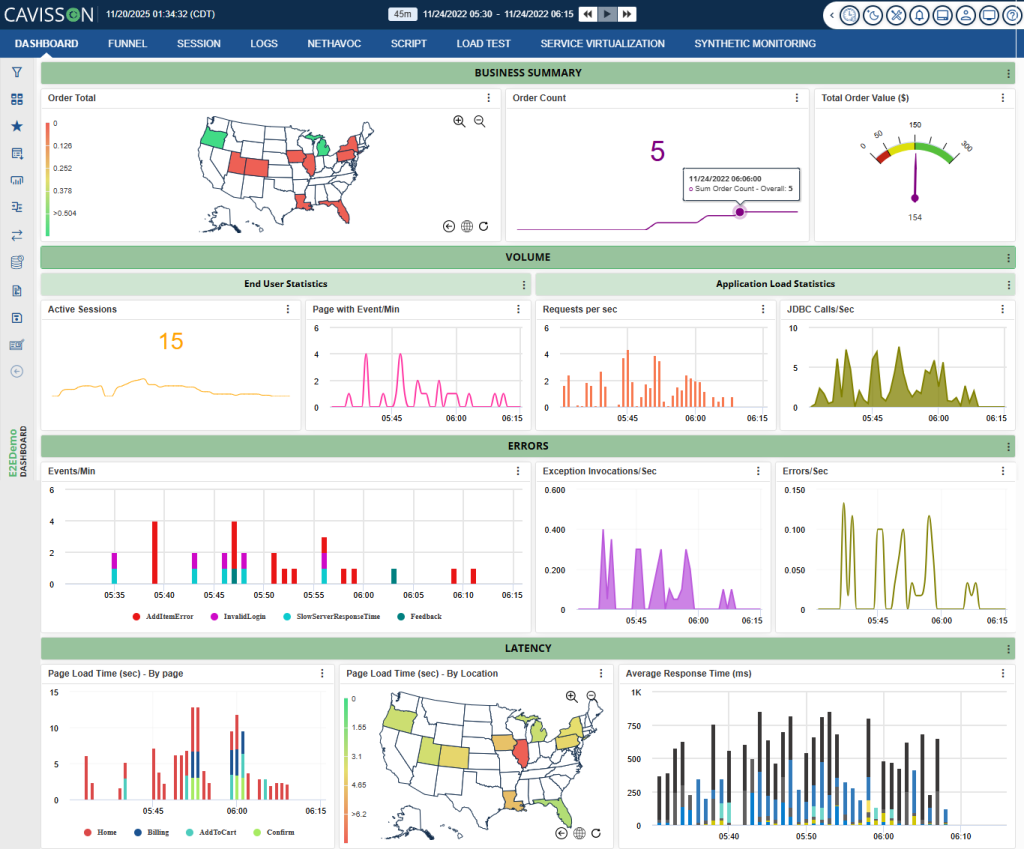
3. Experience-Driven Observability with NetVision

In 2026, user experience is the ultimate KPI. Backend metrics mean nothing if users are struggling.

NetVision bridges backend performance and real-world experience through:

Real User Monitoring (RUM): Understand actual user behavior across geographies, devices, browsers, and networks. See session-level issues as they happen.

Synthetic Monitoring: Proactively test critical user journeys 24/7, catching problems before customers ever encounter them.

The result: You detect and resolve experience degradation before it becomes a business crisis.

Monitoring vs. Observability: A Clear Comparison

Dimension

Traditional Monitoring

Modern Observability

Focus

Known issues and expected failures

Unknown and emerging issues

Data Sources

Metrics only

Metrics + Logs + User Experience Data

Alert Strategy

Reactive threshold violations

Predictive, context-aware intelligence

Visibility

Siloed by team and tool

End-to-end across the entire system

Business Impact

Disconnected from outcomes

Directly tied to customer experience and revenue

Modern enterprises don’t abandon monitoring—they elevate it into observability.

Why Observability Is Mission-Critical in 2026

Observability has evolved from optional to essential, driven by:

Technical complexity: Cloud-native architectures and microservices create intricate, dynamic environments where traditional monitoring goes blind.

Always-on expectations: AI-driven platforms and global user bases demand 24/7 reliability with zero tolerance for degradation.

Team collaboration: SRE, DevOps, and product teams need shared visibility to move fast without breaking things.

Competitive differentiation: In saturated markets, superior customer experience often determines the winner.

Organizations that invest in observability achieve faster innovation cycles, fewer production incidents, and stronger customer loyalty—measurable advantages that compound over time.

Final Thought: Observability as Business Strategy

Observability isn’t about deploying more tools. It’s about understanding your systems the way your customers experience them.

Here’s what sets Cavisson apart: NetDiagnostics, NetForest, and NetVision aren’t three separate products requiring three different logins, dashboards, and workflows. They’re a unified observability platform—purpose-built to work together seamlessly.

One platform. One interface. One source of truth.

When an application slows down, you don’t need to jump between tools to correlate metrics, logs, and user impact. Everything connects automatically. NetDiagnostics shows you the performance anomaly. NetForest surfaces the related log errors. NetVision reveals which users are affected and how severely.

This unified approach transforms how teams work:

  • Faster root-cause analysis — no context-switching between tools
  • Shared visibility across SRE, DevOps, and product teams
  • Integrated workflows from detection to diagnosis to resolution
  • Lower total cost of ownership — one platform instead of a patchwork of point solutions

Cavisson Systems enables enterprises to transition from reactive monitoring to intelligent observability—keeping performance, reliability, and experience aligned with business objectives. All from a single, unified platform.

Because in 2026, the question isn’t whether you monitor your systems.

It’s whether you truly understand them—completely, quickly, and confidently.

Ready to transform your observability strategy? Discover how Cavisson’s unified platform can help your enterprise move from visibility to insight to action—without the tool sprawl.

AI-Powered Test Data Generation in Cavisson: Transforming the Way Teams Prepare for Testing

AI-Powered Test Data Generation in Cavisson: Transforming the Way Teams Prepare for Testing

In modern software delivery, the need for realistic and dependable test data has become central to both functional and performance engineering. Whether organizations are validating an online retail flow, executing a financial transaction simulation, or running large-scale insurance scenarios, their test results are only as accurate as the data that powers them. Unfortunately, traditional approaches to test data—manual spreadsheets, static datasets, or partial clones of production—often lead to inconsistency, privacy concerns, and unreliable outcomes. 

Cavisson solves this challenge with an intelligent, scalable, and secure test data generation engine, enabling teams to create rich, production-like data instantly and seamlessly. Integrated deeply within the Cavisson ecosystem, this capability helps organizations accelerate testing cycles while maintaining accuracy, compliance, and realism. 

Why Test Data Generation Has Become Essential 

Organizations frequently struggle with outdated, incomplete, or non-representative test data. When testing relies on weak or artificial datasets, applications may appear stable or performant during validation but behave differently under real conditions. Furthermore, using production data raises regulatory and security risks that most enterprises cannot afford. 

Realistic synthetic test data addresses these gaps by ensuring that test scenarios closely resemble real user interactions, uncover deep performance issues through natural data variation, eliminate dependency on sensitive production information, and streamline testing cycles by removing manual data preparation delays. 

A Rich Library of Realistic Data Fields 

S.NoData TypeData FieldsSample ValuesData TypeData FieldsSample Values
1
Commerce
Department
Garden
Company
Verb
optimize
Babytransform
Outdooraccelerate
2
Discount Code
RSW0KY805Jorchestrate
N3P9F3Q2enable
9CHX6GLRP1
Noun
platform
3
Discount Value
percentagesolution
valueecosystem
valueframework
4
E A N13
9161586988333architecture
9659879992315
Adjective
scalable
7381253448973cloud-native
5
E A N8
23561137enterprise-grade
82777227resilient
62114684intelligent
6
I S B N10
3158138212
Name
Nexora Systems
3658389249CloudEdge Technologies
3174887623InfiniCore Solutions
7
I S B N13
9584871382362DataVista Labs
692575133865OmniScale Networks
1244285688341
Type
Public Company
8
Payment Provider
PaypalPrivate Limited
MerchantStartup
OneStaxEnterprise
9
Payment Type
Credit CardSaaS Provider
Bank Transfer
Industry
Banking & Financial Services (BFSI)
Credit CardRetail & E-Commerce
10
Product Adjective
FantasticHealthcare & Life Sciences
GorgeousTelecommunications
ElectronicManufacturing

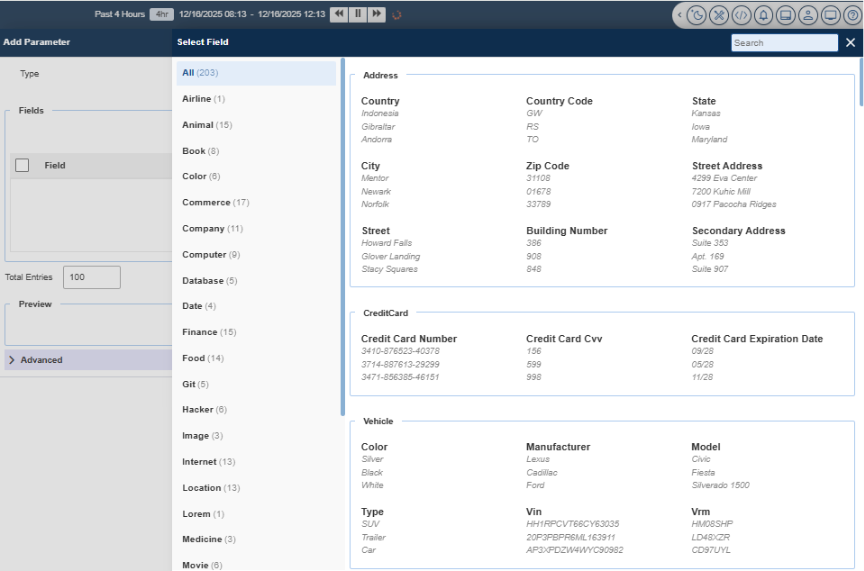
Cavisson offers a wide range of pre-built data fields across categories such as address, finance, commerce, internet, location, and vehicle information. These fields reflect how real-world data is formatted, bringing more authenticity to test scenarios. 

One particularly powerful aspect of Cavisson’s data generation is the realism of the address data. The addresses produced follow valid geographical formats and can even be verified through Google’s geo-address validation, meaning they map to real, recognizable places. This gives performance and functional tests an added layer of reliability, especially for applications involving delivery, logistics, or geo-specific workflows. 

Intelligent and Diverse Data Generation 

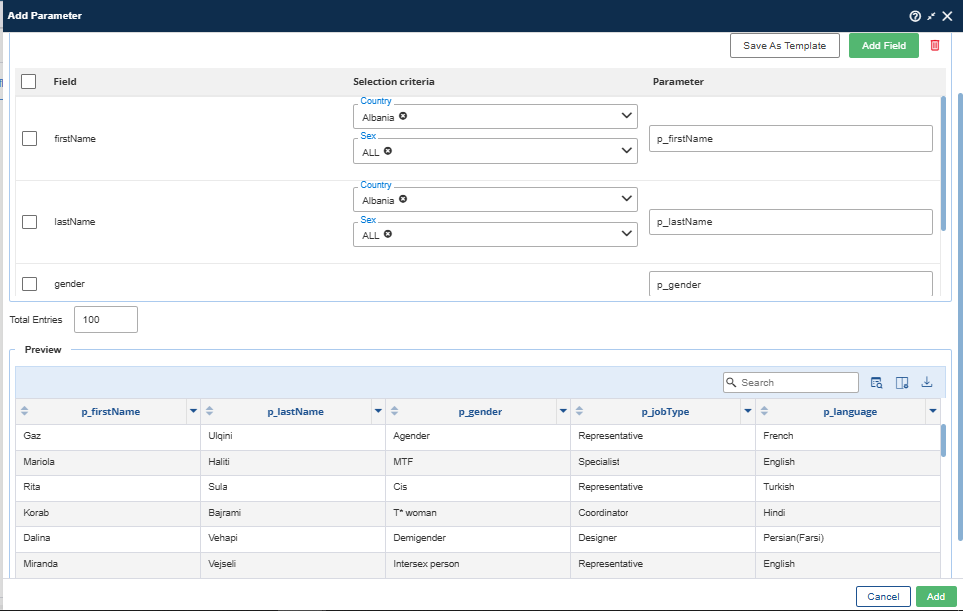
The strength of Cavisson’s engine lies not just in its variety but also in its intelligence. The generated values are diverse, naturally distributed, and free from repetition, helping teams uncover data-driven issues that repetitive or simplistic datasets often miss. 

Teams can generate massive volumes of synthetic data—ranging from dozens to millions of entries—while preserving uniqueness and realism. Whether generating financial records, user profiles, product catalogs, or transaction patterns, Cavisson ensures that the output reflects real usage while maintaining complete data safety. 

Seamless Integration Across Cavisson’s Testing Ecosystem 

Cavisson ensures that generated test data flows effortlessly into every stage of the testing lifecycle. It integrates smoothly with NetStorm scenarios, virtual user parameterization, API flows, pass/fail rule evaluation, and CI/CD pipelines. 

Since the data is fully synthetic, it can be shared freely across teams, used in cloud setups, or embedded directly into automation workflows—without compliance concerns or risks of exposing sensitive information. 

Supporting a Wide Range of Test Scenarios 

Enterprises across different domains use Cavisson’s data generation to create domain-specific datasets. Retail systems populate product inventories and user carts. Banking generates transactions and account data. Insurance teams simulate claims and client identities. Telecom companies model subscriber and device details. Cavisson’s flexibility ensures that the data adapts to the business logic of any industry. 

Conclusion 

Reliable test data is the backbone of meaningful and effective testing. Cavisson’s AI-powered test data generation simplifies this crucial step by producing realistic, diverse, and fully synthetic datasets at any scale. With its extensive field library, intelligent variation, seamless integration, and Google-verifiable address realism, Cavisson equips testing teams to build trustworthy environments. 

In a world driven by rapid releases and continuous validation, Cavisson ensures that organizations always have accurate, compliant, and production-like test data available on demand.